Monday, April 20, 2026

Cavalier Luigi Cappellini Castello Verrazzano


Cavalier Luigi Cappellini 

CASTELLO VERRAZZANO

GREVE, ITALY


Not long ago, Cavalier Luigi Cappellini and his wife, Silvia, gave a dinner party, at the Castello di Verrazzano, in Chianti, to mark the anniversary of the discovery of New York Bay, by Giovanni da Verrazzano, in 1524. Luigi, a springy, elegant Tuscan, is the owner of the castle that was the seat of the Verrazzano family for more than seven hundred years. In addition to making wine and olive oil and running the hunting parks, forests, and tenant farms of the original estate, Luigi has assumed the role of ambassador from Verrazzano to the City of New York, which keeps him in frequent transatlantic motion.

The castle is perched on a mountain spur high above the non-navigable River Greve. It is surrounded by vineyards and olive groves, and its crenellated medieval tower is just visible above a cluster of cypresses. The Verrazzano family was already ancient when Giovanni was born here, in 1485. When he embarked for the New World, in January of 1524, at the request of King Francis I of France, Europeans had explored Florida and Newfoundland, but the coastline in between was still terra incognita. After a subsequent voyage, Giovanni's brother Gerolamo drew the first good map of the Eastern Seaboard. Verrazzano was a true son of the Renaissance, a navigator, astronomer, mathematician, and humanist, whose main interest was geography, not gold. His observations on the natives of North America were sympathetic and anthropologically meticulous. (The only time he used the term "savage" was in describing the Indians of Maine who "made the most disparaging and dishonorable gestures that an uncouth person could possibly do, such as exposing their bare arses to us, all the while howling with laughter.") Giovanni da Verrazzano met a grisly end a few years later, when he was captured by natives on a Caribbean island; Gerolamo watched helplessly from a ship as the Indians on the beach killed his brother, cut him into pieces, and devoured him raw.

The last Verrazzano died in 1819; the property then passed through several other noble Florentine families before coming to the Cappellinis, who acquired, with the castle, the Verrazzano family portraits (including the only known life portrait of Giovanni) and the family archives, armor, furniture, art, and land.

In 1963, before the Verrazano Narrows Bridge was completed, three building stones were chiselled out of the ancient wall of the castle and carried to New York, where they were cemented into the dedicatory monument on the Staten Island side of the bridge. Three smooth water stones were then taken from the site of the bridge, carried back to Chianti, and plastered into the castle wall. Above them a plaque was affixed, stating that Verrazzano's discovery of New York Bay had made possible"a future nation in which his own people and many other races would be made brothers in freedom." 

Luigi gives an anniversary dinner every year, in the castle's massive beamed dining room, which commands vertiginous views of the Valle della Greve and the Chiantigian hills. But this time, because of the terrorist attacks in the United States, the mood was different. Luigi ran in the New York City Marathon in November, and at the dinner he spoke about standing on the Verrazano Narrows Bridge, among twenty-four thousand other runners, from all over the world, looking toward the hole in the skyline as they awaited the start of the race.

There was a moment of silence for the victims of September 11th. Then Dario Cecchini, who owns a butcher shop in the nearby town of Panzano, rose to speak. Dario has a powerful Tuscan voice and is renowned for spontaneous recitations of Dante to customers in his shop. The room became still as he read a letter that Verrazzano had written to the King of France: 

Serenissimo Re,

After one hundred leagues, we came to a most beautiful spot where an immense river flowed to the sea between two little hills. . . . We sailed up the river with our ship and disembarked onto shore. The land was thickly populated. The Indians were of an aspect similar to the others we have met. They were dressed in bird feathers of many colors and they greeted us happily, with exclamations of great joy and wonder. We went up the river half a league, where we discovered a truly enchanting bay about three leagues in circumference. Moving about busily from one shore to another were some thirty boats overflowing with natives who were curious to see us. We christened the new land "Angoleme" after Your hereditary principality, and the bay enclosed by this land we called "Santa Margarita" after the name of Your sister, who exceeds all other women in intelligence and decency. We left this splendid and hospitable new land with true regret.

Monday, February 23, 2026

Piedmont and Barolo


BAROLO

RINALDI


BAROLO MAP

PIEDMONT


PIEDMONT & BAROLO


Chianti Report


CASTELLO VERRAZANO

BARRELL CELLAR

GREVE in CHIANTI 


VILLA CALCINAIA

CONTI CAPPONI 

GREVE 


VILLA CALCINAIA

DRIVEWAY

GREVE in CHIANTI


Author ITALIAN WINE GUY

DANIEL BELLINO ZWICKE

LUNCH with CONTI CAPPONI 

NICOLA & SEBASTIANO CAPPONI

1997


CHIANTI PRIMER

by AGNUS 


Map - CHIANTI CLASSICO REGION


Including TOWNS of :  GREVE, PANZANO, RADDA

CASTELLINA in CHIANTI,  GAIOLE


OTHER CHIANTI REGIONS of TUSCANY

CHIANTI RUFFINA

CHIANTI FIROENTINI

CHIANTI PISANE

CHIANTI MONTESPERTOLI

CHIANTI MONTALBANO

TUSCANT, ITALY


SANGIOVESE GRAPES

CHIANTI CLASSICO


On CHIANTI


CHIANTI


ITALIAN FOOD & TRAVELS

ROME VENICE TUSCANY PIZZA PASTA & ???

READ ABOUT DANIEL'S ADVENTURES

 in CHIANTI CLASSICO


LUNCH WITH The COUNTS

CONTI CAPPONI NICOLA CAPPONI

And CONTE SEBASTIANO CAPPONI 

At VILLA CALCINAIA

GREVE in CHIANTI

1997


"LUNCH at VILLA CALCIANAIA"


The CONTI CAPPONI


 The first time I was ever in Chianti was the most memorable. Yes, I’ve had many wonderful days in Chianti, but nothing like that first day. I was in the process of putting together my restaurant Bar Cichetti, and this was another exploratory trip. I didn’t have the wine connections that I would garner in later years, knowing so many Italian wine producers that I do these days.

 Some friends set up two vineyard visits in Chianti Classico for me, my business partner, an associate of ours, and the lady Gilda who set up our meeting the Conti Capponi, and visiting the Capponi family estate - Villa Calcinaia in Greve. In the Capponi family, there are two brothers, Count Sebastaiano Capponi & his brother Nicolo. We were in Florence and had to meet Nicolo at their palazzo - Palazzo Capponi on the Arno River, just two feet from the Ponte Vecchio Bridge. Our friend Gilda is a good friend of the Capponi’s and she brought us to the Palazzo and introduced us to Conti Nicolo Capponi. When we met, I thought I was talking to Prince Charles. Nicolo was brought up with a British nanny and was educated in England, and thus when specching in English, he had an English accent. I was quite surprised when I met him. Anyway, we hopped in two cars, and drove down to Grave and the Cappoli Family wine estate - Villa Calcinaia in Greve. You take the ancient Roman road known as the Chiantigiana south out of Florence and into the heart of the Chianti Classico wine region. 

   We made a right, turning off the Chiantigiana road and onto the Capponi property. And just like you see in the movies, the drive leading to the Villa was tree lined on both sides of the road with majestic Cypress Trees. “Wow,” I was blown away. We arrived at the Villa, a sort of small castle, and it was lovely. The Capponi family has owned this property since 1524. The current structure of the Villa Calcinaia was built in the 1700s. Quite a place to be, and I was in awe. Nicolo took us inside. We entered the kitchen, which looked much the same as it did 300 years before. A lady was cooking at the fireplace. She was the family cook, and Nicolo introduced us to her. We chatted for a few minutes, and then Nicolo took us on a tour of the cellars. We left the kitchen and walked down a hallway, and as we approached one room, Nicolo said, “here we have Alibaba.” He was referring to the beautiful large terracotta vats that were filled with Olive Oil. Wow?

Then Nicolo said, “this is the Mother. It’s 300 years old.” Wow, again. The 300 year old mother is a starter to make vinegar. And it’s 300 years old. 

  Besides making wonderful Chianti wine, the Capponi family produces Tuscan Olive Oil, vinegar, Grappa, and Vin Santo wine. 

   Nicolo then took us to another room where white grapes were drying on racks. These grapes were for the Vin Santo, which must be dried before vinifying in order to make that “lush nectar,” that is Vin Santo (Holy Wine).

    After seeing the grapes for the Vin Santo, Nicolo took us into the main cellar room where the family’s fine Chianti was aging in numerous large Slovenian Ok Casks. “Wow,” again. It made me feel amazing. Being there in the storied wine cellars of The Villa Calcinaia, in the heart of Chianti Classico. “Wow?” 

   Nicolo got a few glasses and opened a small spout on the cask, to draw some wine from. He then gave us each a glass, and we tasted the wine. “The Chianti.” It was marvelous, and so special, to do a barrel tasting of some Capponi Family Chianti. Quite remarkable. 

  Nicolo’s brother Sebastiano came into the seller, and that’s when we first met. Sebastiano has been running the winery since 1992. We met him that day in 1997, and I’ve known him ever since. He comes to New York often, to do tasting and attend Chianti events in New York, and do business promoting and selling his family;s wine. And me being in the Italian restaurant business for many years, I’ve spent time drinking wine and breaking bread with Sebastiano. His brother Nicolo is a writer and scholar, and not that involved in the wine business, as Sebastaino. I’ve never seen Nicolo in New York, though Sebastiano, I have many times over the years, and it is always a great pleasure to see him.

   From the cellars, Nicolo took us outside to show us the gardens and vineyards. Quite beautiful. The to the Grand Finale of the day.

  Nicolo took us to the dining room, where we were going to have lunch with the Conti Capponi brothers Sebastiano & Nicolo Capponi. Wow, can you believe that? Me Danie Bellino, dining with two Counts of one of Florence’s oldest and most noble families, The Capponi’s of Florence, Italy. And at the wine estate in Greve, Chianti Classico, Italy. How did I ever get here? Well it was a lot of hard work, and long hours working and educating myself, that found me here, having lunch with The Conti Capponi, at Villa Calcinaia, breaking bread, and drinking their Chianti, with two aristocratic, noble gentleman Conti Sebastiano Capponi and his brother Nicolo, Gilda, Maron, and Tom.

   The meal was simple, and delicious. We had Tuscan Pecorino, Salami, bread, and olives for antipasto. So good. There’s nothing like tasty Italian Cheese and local Salami. Drinking Capponi family wine (Chianti) with the Capponi’s themselves, inside an ancient dining room in the Villa Calcainaia. I dipped my bread into the lush Olive Oil. This olive oil is some of the World’s finest. Yes it sounds cliche, but “It doesn’t get any better than this.” Not by a long shot. The antipasto was so good, I can still taste the Pecorino and Salami today, just thinking about it. 

   The antipasto was followed by a simple Pici Pomodoro, fresh homemade pasta in a tasty tomato sauce. We drank more Chianti. I was in “7th Heaven.” This was one of the most memorable days in my entire life. And still, almost 30 years later in 2025.


   For the main course, we had roast chicken that we had watched the cook begin to cook over an open fire in the old kitchen. The chicken was served with roast potatoes. We kept drinking Chianti.

   The Grand Finale of the meal was the Capponi’s Vin Santo, served with Biscotti. What can I say about Vin Santo? It was like putting the cherry on top as they say. We had the most wonderful meal, but if that wasn’t enough, one more wonderful thing was added. The Vin Santo. Vin Santo is a special wine of Tuscany. It is made in limited production. It is a lush flavorful wine, with a taste of apricots, hazelnuts, dried fruit, and caramel. It is brought out to drink on special occasions, and this was one. Having opened America’s 1st Venetian Wine Bar - Bar Cichetti, for doing so, I became a darling of the Italian Wine World. When we first opened Bar Cichetti, all the Italians coming to New York wanted to meet me for what I was doing. I had a love and passion for wine, as well as good knowledge, which grew year by year. And year by year, I made more and more relationships with Italian wine people. Estate owners and winemakers, and those prominent in the World of Italian Wine. I’ve been invited to many special Italian Wine Dinners, luncheons, tasting, and events. I’ve visited many wine estates all over Italy, and have become friends with the owners, and their families. And to this day, though I have had so many special times, till this day, none tops my first Italian Wine experience in Italy, meeting and having lunch with the Conti Capponi. “A very special day.” 


    Basta!


Excerpted from ITALIAN FOOD & TRAVELS


Daniel Bellino Zwicke - Amazon.com


CHIANTI


Tuesday, January 27, 2026

Some Favorite Italian Wines

Remembering TRE BICCHIERI 2018 - NEW YORK CITY

And Some FAVORITE ITALIAN WINE


Screen Shot 2018-03-02 at 12.01.35 PM.png


TRE BICHIERRI NEW YORK

2018


Screen Shot 2018-03-03 at 3.07.28 PM.png

Felix Jermann

with His Family's

VINTAGE TUNINA

SUPER WINE !!!

And One of The Greatest Wine Wines Ever !!!


Screen Shot 2018-03-03 at 3.12.51 PM

LAMBRUSCO

Screen Shot 2018-03-03 at 3.08.02 PM.png

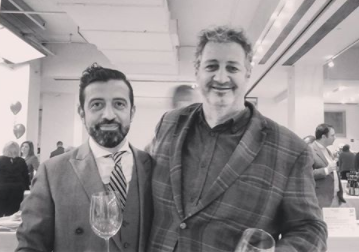
Me and My Buddy Antonio (L)

.

Screen Shot 2018-03-02 at 10.46.56 AM.png

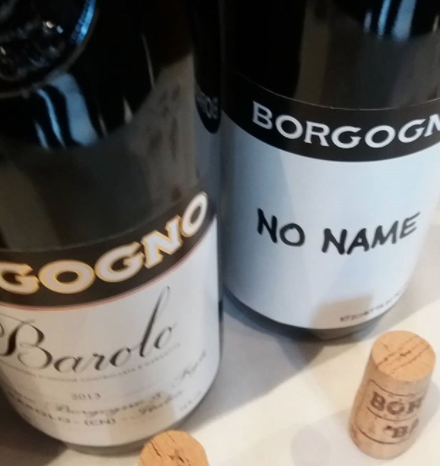
BORGONO

BAROLO

"My Favorite Barbaresco"

ALWAYS !!!

Screen Shot 2018-03-04 at 1.38.02 PM

"BELLINO & STUPINO"

The "KING of BARBARESCO" ITALO STUPINO

with AUTHOR DANIEL BELLINO-ZWICKE

Since I first became friends with the great Italo Stupino of Castello Di Neive and drank his wonderful wines, Italo's Barbaresco became my single favorite of the category. Italo's Barbaresco can "Blow Gaja's Out of The Water" though they are not nearly as well known, and by no means no where near as "Expensive" (Obscenely So), just great Barbaresco , as was this years Gamberro Rosso Tre Bicchieri Winner, BARBARESCO CASTELLO Di NEIVE "SANTA STEFANO" RESERVA 2012 , it was outstanding.


Screen Shot 2018-03-03 at 3.13.02 PM


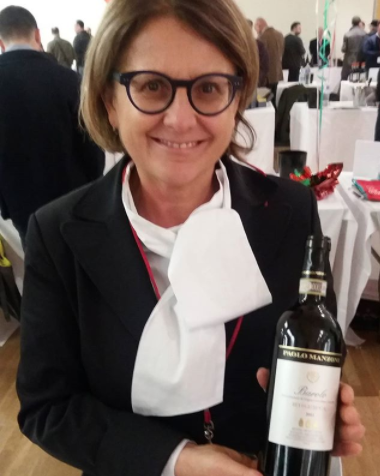
BAROLO PAOLA MANZONE

.


Screen Shot 2018-03-03 at 3.08.23 PM.png


ZENATO AMARONE 2011 RESERVA 

"It was KICK ASS GOOD" !!!


The ZENATO AMARONE RESERVA 2011 was a stunning wine, and one of my top 3 Favorites of the whole show. This Amarone was perfectly in-balance and full in flavor, with inviting dark ripe fruit flavors with touches of dry figs and other robust flavors. Zenato always produces one of the World's great Amarone's, and this vintage was no exception.


Screen Shot 2018-03-04 at 1.19.11 PM 

JERMANN

VINTAGE TUNINA


As, I've said, the VINTAGE TUNINA from Silvio Jermann was my favorite wine of the day, it was absolutely wonderful. The wine was full in my mouth with all kinds of tasty tropical fruit in the mouth and lots of appealing flavors I can't even explain, just to say that, "It tasted so Dam Good," and I just Loved it. Simple as that. Brilliant straw yellow in color, with golden reflections. Intense, ample, very elegant and persistent, with scents of honey and country flowers. On the palate it is dry, mellow, well balanced, with extraordinary persistance thanks to full body.

Notes on JERMANN "VINTAGE TUNINA" :

The first tests of the field blend date back to the 1973 harvest, and the first vintage put on sale under this name and label was the 1975 harvest. For this particular grape blend, a selection is made of the best grapes which are gathered late, around two weeks after the normal harvest, on a surface of around 16 hectares of vineyard cultivated on Ronco del Fortino. The training system forms used are guyot-cappuccina, with 6000-7000 vines per hectare and with a yield of 40–60 quintals. The name, Tunina, refers to the old owner of the land on which the original vineyard is located and it is dedicated to Casanova’s poorest lover, who was a governess in Venice and who was also known by the diminutive “Tunina” (Antonia). As early as 1976 Luigi Veronelli called it “the Mennea of Italian wines” (Pietro Mennea was an athlete who competed in the 1976 Olympics in Montreal), and then it won wine of the year (1997 vintage) from Gambero Rosso and the Wine Oscar for the 1998 vintage from the A.I.S. (Associazione Italiana Sommelier). To conclude, we quote from an article by Cesare Pillon which appeared in “Civiltà del Bere” (October 2000). “…but exceptional the Vintage Tunina is, and for many other reasons. No-one until now has ever realised it, but it is the most extraordinary meditation wine in existence. Not in the passive sense (wine to drink while meditating), but in the active sense: it is a wine that makes you meditate…”

.


.

Screen Shot 2016-10-30 at 2.25.18 PM


SUNDAY SAUCE

AMERICA'S FAVORITE ITALIAN COOKBOOK

Daniel Bellino Zwicke

AMAZON.com