Showing posts with label BELLINO on VINO. Show all posts

Thursday, February 27, 2025

The Rise of Barbaresco Aldo Vacca


Vineyards in Barbaresco


ALDO VACCA on BARBARESCO


PRODUTORRI BARBARESCO


PRODUTTORI BARBARESCO


It is a rare chance to taste all the single vineyards side by side and the best opportunity to really try and understand the nuances and terroirs of each of the separate sites. What is immediately clear is however variable in their tannin profiles, aromatics and fruit flavours, they are all incredibly consistent in quality. 

There isn’t a bad wine in the line-up, more than that, there isn’t a single wine that is less than excellent. All the wines share the same composure: the acids vibrant yet beautifully integrated, the tannins present but never awkward, despite Nebbiolo’s tendency to be slightly grippy and astringent, particularly in youth.

After visiting the winery in June we knew Aldo was extremely excited about the 2016 vintage and rightly so, it is an outstanding wine and an incredible buy for the price. If you missed our initial release in the summer of last year, don’t miss an additional allocation to be released next week. But he is also very proud of this latest line-up of single vineyard Riservas from 2015 released for the first time on the market this week.

2016 as a vintage is always going to overshadow the 2015, despite it being a lovely vintage in Barbaresco and certainly in great contrast to the much cooler 2014. These single vineyards certainly express both the warmth of the vintage and the quality of each specific site. None of the wines were raisined, but perhaps as Aldo describes a “little tighter” than the 2016 Barbaresco (tasted alongside) as the dry, warm vintage meant the grapes were picked perhaps five to six days earlier than the ideal picking date, in order to retain the acids and freshness at the expense of the tannins achieving complete phenolic resolution. Aldo is not afraid to give a very honest picture. But he still is immensely proud of these wines and he should be. 

It was this additional six to seven days of phenolic ripening on the vine that perfected the 2016 vintage. Aldo feels that 2015 produced wines that in their youth are slightly more reserved in style, with sharper tannins and warm fruit flavours. Unlike the 2016s these wines will need more time to bed in (three to four years) and will reach their peak around 10 years of age.  The 2016s in comparison are already fully integrated due to the phenolic ripeness and will age 20 years plus. The contrast in the vintages doesn’t take away the quality of the wines in 2015, it just provides them with a more limited drinking window.

Aldo states the wines are already much more open than they were in September and tasting them this week they already feel beautifully expressive and open apart from the more austere vineyards of Asilli, Rabaja and the Montestefano.

The single vineyards are not made every year and none were made in 2018 vintage, but when they are, all nine of the vineyards are produced in varying quantities. In 2015 the lowest productions come from Paje and Asili, which will not be made available to buy in stand-alone cases. The best part of the Riserva release is the opportunity to buy all nine vineyards in a mixed case containing one bottle of each.

The single vineyards

Produttori del Barbaresco produces nine single vineyards, all historical sites within the boundaries of the Barbaresco commune. First released in 1967 as Riserva Special (five vineyards were produced then), they are bottled only in outstanding years. In such vintages the best grapes from each vineyard site are selected for single-vineyard bottlings, while the remaining grapes are used in the Barbaresco blend. 

Pora, "the Dolce Vita wine"

Proximity to the Tanaro River creates a unique microclimate for the Pora, a beautiful hill with West and South exposures, while the northern side of the hill is a sheer bluff that drops into the river and where the famous white truffles can be found in season. Due to the proximity to the valley floor, Pora is relatively warm in the early morning hours, but breezy with slightly higher humidity through most of the day. 

Soil fertility is slightly higher here too and this gives the wine a smoother character, tannins are soft and the aromas always tend to open up in the early years of its life. Pora is also one of the most historical vineyards in Barbaresco, as it was part of the property of Dominizio Cavazza, the father of Barbaresco, who in 1894 founded the first Cantina Sociale. Produced as a single vineyard by Produttori del Barbaresco since 1967.

2015 There is a lovely plushness to this Nebbiolo particularly in the front palate with ripe juicy red berry fruits beautifully integrated with very sandy tannins. The nose needs a little coaxing but has a lovely floral perfume. Very well balanced and already quite open and little to no bitterness on the finish. 

Rio Sordo, "The silky one"

The vineyard is a long, southwest-exposed hillside in the southern part of the Barbaresco village, not far from the river. The light limestone soil with a relatively low calcium content compared to other areas of Barbaresco produces wines where tannins are never dominant, instead, they show a silky quality on the palate that makes them extremely attractive and seductive, never imposing, always elegant. Behind the smooth elegance, however, lies a core of powerful structure and very well-balanced tannins that give to the Rio Sordo its complexity and longevity. First produced as a single vineyard by Produttori del Barbaresco in 1978.

2015 

Very exuberant aromatics jump out of the glass. Beautifully uplifting fragrant perfume. A little touch of ripe molasses mixes with sweet baked berry fruits without any raisining. Touch of orange bitters but still very fleshy juicy, ripe and precise. 


SUNDAY SAUCE
AMERICA'S FAVORITE ITALIAN COOKBOOK


Asili, "A world on its own"

This spectacular vineyard has created some of the greatest Barbaresco ever and it has a strong following all over the world. The main part of the Asili vineyard is a protected bowl facing southwest next to Pora, but farther away from the river and the valley influence with warmer and less breezy microclimate during most of the summer. To the East, Asili ends with a bricco, top of the hill, also facing southwest and with a similar soil composition, bordering Rabaja. 

The wine is intense, certainly not a full-bodied Barbaresco, but nevertheless showing a very imposing personality. Usually quite closed in its youth it opens up slowly with impeccable complexity and style… a classic Barbaresco, and also one of the most distinctive vineyards of the region. First produced as a single vineyard in 1967.

2015 Fairly closed on the nose but with plenty of brooding earthy, savoury tones. There is tremendous power on the palate, with very compact tannins that despite their intensity retain a level of elegance and refinement. You can taste the sunshine too with ripe baked berry fruits that the palate remains very vertical, tense and focused. This will benefit from a good five years of ageing. 

Paje, "Evergreen"

The vineyard is a small bowl facing southwest and it lies between the village itself and the famous Asili vineyard. However, Paje is slightly lower in altitude and the vineyard is more open to the Tanaro River influence resulting in a cooler microclimate. The soil is limestone with high calcium level. In result, the wine combines elegance and complexity with intense tannins and it is never shy in acidity. 

The latter makes Paje somehow sharper and brighter in its first years, with lovely youthful fruit and flowery notes, almost minty in cooler vintages. Paje is particularly attractive after some ageing, when the wine still retains a fruitful and fresh palate. First vintage produced was 1967 as a small commemorative label for the “Cavalieri del Tartufo” association. Regular production started from the 1982 vintage.

2015

One of the standouts in the lineup with a distinct energy on the palate that get the blood pumping. A lovely focused floral undercurrent with wonderfully vibrant precise fruit on the palate. The tannins start very fine but begin to firm up on the finish adding structure and power and will no doubt integrate with age. This is really excellent with real breadth and natural concentration on the palate. 

Ovello, "The tomboy"

Ovello is the northernmost vineyard in the village of Barbaresco, higher in sea level and dropping down to the river in a 300 feet abrupt bluff. It is a relatively large area with a number of subzones with West and East exposure, all sharing a similar calcareous soil rich in clay. The extra clay and the cooler microclimate give the Ovello its exuberant and youthful quality in the fruit and its fuller body, which defines its distinctive personality. 

Explosive fruit on the palate and firm, sometimes rough tannins on the finish, these wines always bring a lot of joy to the palate and delivers powerful structure, that needs some years of bottle ageing to balance out. Domizio Cavazza had vineyards in Ovello (and Pora) when he started producing Barbaresco in 1894. It was among the first five vineyards produced as a single vineyard by the Produttori in 1967.

2015 There is an amazing density and power at the centre of the palate that oscillates round the palate. The palate is stunning with incredibly pure rose petal and stem aromas. Full-bodied, powerful and structured  but beautifully managed with a textural complexity that creates a stunning layering on the palate. Still contains a level of austerity that requires time to meld and mellow. 

Muncagota, "Pristine beauty"

This single vineyard looks South/East, facing the cooler morning sunshine instead of the warmer afternoon sun. Because of that, the Muncagota vineyard shows beautiful floral characteristics and often a specific mint character on the nose. 

Calcareous soil and a low level of sand gives to the wines of Muncagota extremely focused fruit and firm stylish tannin. Muncagota is a perfect example of the elegant, intense qualities that makes Barbaresco one of the most interesting and unique wines of the world. First produced by Produttori del Barbaresco as Moccagatta in 1967. Muncagota is the piedmontese dialect version of the word Moccagatta, same vineyard, different spelling.

2015 There is distinctly sweeter fruit on the Muncagato and lots of perfume and a baked fruit profile that again retains precision and is not at all over ripe. Definitely more austere tannins on the palate but the fruit concentration contours beautifully over this structural powerhouse. 

Rabaja, "Pure breed"

Rabaja produces quintessential Barbaresco, one of the most complete and balanced of the single vineyards. The vineyard lays at the conjunction of the two main ridges that from the Barbaresco village, one starting at Rabaja and going west towards the Tanaro River (with progressively less calcium content in the soil). The meeting of these two different soils gives to Rabaja its incredible complexity. Bordering both Asili and Muncagota it combines the personality of these two great vineyards with an extra richness due to the South/West warm exposure. First produced by the Produttori as a single vineyard in 1971.

2015 Incredible aromas oscillate from the Rabaja – wow, the perfume again gets the blood pumping. Very complex concoction of white stone, lavender, dried herbs, wild flowers. The palate is dense and compact but the tannins beautifully refined despite their intensity and structure. The tannins are extraordinary really almost elasticated, creating so much breadth on the palate and beautifully integrated. So powerful yet so balanced. 

Montestefano, "the Barolo of Barbaresco"

It is one of the vineyards with a higher concentration of calcium in the soil that gives the wine a powerful tannic structure. The extra heat of the south-facing slope is responsible for the Montestefano full body and almost meaty texture. It produces deep flavoured wines with massive tannins, but quite ripe and well-integrated. 

In a wet season, its grapes can hold rain well and is usually the last one to be picked among the Barbaresco vineyards. For all these reasons it is probably the Barbaresco that more reminds of Barolo where tar and rose prevails on the refined violet flavours. Despite this massive attitude remains a true Barbaresco, never too heavy on the palate and with a classy finish that lingers on the palate without overwhelming your senses. First produced by Produttori in 1974.

2015 A really vibrant zesty citric uplifting aromatic profile really contrasting with dense structural tannins full of power and intensity. The contrast is quite unique contrasting vibrant freshness, mouthwatering acidity and more earthy savoury dryer mineral savoury tones and a clay-like structure

Montefico, "the Academic"

A not widely known vineyard, yet highly sought after by the Barbaresco aficionados. It is often compared to the slightly larger and more famous Montestefano vineyard because of the similar soil (high calcium) and close proximity between the two. It lays halfway between the Montestefano and the Ovello. 

Exposure is full South, therefore quite warm, but it is not unusual for Montefico to have brisk morning hours during the growing season because of the cooler northern wind that occasionally funnels in form the Tanaro River and into the narrow valley between the villages of Barbaresco and Neive. Austere when young and somehow less fleshy than Montestefano, it shows a beautiful mineral finish. It produces wine with the breed of any classic Barbaresco and with incredible complexity behind the tannins. First vintage released was 1970.

2015 There is a lovely energy to this wine matched by its finesse on the palate, another highlight in the in the line up. Fantastic exuberant complex floral perfume with added sweeter berry fruit notes. High level of ripeness but no raisin-like qualities retaining precision and freshness. The clarity of fruit here is exceptional and the long length is testament to the quality here. This has everything.


AGNUS with ALDO VACCA
Aldo Vacca of PRODUTTORI
Talking BARBARESCO


Tuesday, January 29, 2019

New York Brunello Tastnig 2019

CARPARZO BRUNELLO
At The NEW YORK BRUNELLO TASTING 2019
 
 
Brunello di Montalcino means “Brunello of Montalcino” with Montalcino being a hilltop village located south of Siena in Tuscany and Brunello being a very specific clone of Sangiovese called “Sangiovese Grosso” which means ‘little dark one.’ It’s grapes are full and dark, and it is the only Tuscan red wine that is not a blend so you get the absolute purest expression of the grape. It’s classic flavor profiles include blackberry, black cherry, chocolate and leather. Is it just me or is that not insanely delicious sounding?
Just like France, Italy takes wine making very, very seriously. The DOCG rules there are strict and wine makers are held only to the highest standards. Case in point: Brunello vineyards can’t be planted at a higher altitude than 1968ft above sea level in order to guarantee that the grapes reach the highest flavor and ripeness. Additionally, Brunello can’t be bottled until after it has aged no less than 4 years; 5 years for the Reserves. This is because it takes THAT long for the strong tannins to soften. These are just a couple of the reasons why Brunello is so unique and truly special.


Tasting Ticket
BENVENUTO BRUNELLO
NEW YORK 2019
 
"I Miss GOTHAM HALL"
 
Yes, I miss Gotham Halle where the New York Benveuto Brunello tasting was helf for a number of years. Gotham Hall is one of the most beutiful event spaces in all of New York. Gotham Hall is in gorgeous hall that once housed The Greenwich Savings Bank. This year, the Brunello Event was moved to  Tribeca 360, which is a nice enough space with a fantastic view of lower Manhattan to the Hudson River and New Jersey beyond. I'd rather be in the beautiful NeoClassic Building that houses Gotham Hall, you feel as if you're in a Beautiful Palazzo in Venice or some other grand Italian city. Tribeca 360 has way too much light, and the vibe is completely different than a Brunello Italian Wine Tasting at Gotham Hall, Tribecca 360 justed can't compete with the Beauty and Granduer of Gotham Hall.
Anyway, "Nuff Said," lets move on to talking about Brunello and the tasting itself.
IL POGGIONE
 
Great VIN SANTO and of course Brunello Di Montalcino
 
IL Poggione was one of my favorite producers showing at the 2019 Benvenuto Brunello New York Tasting. I really liked the Il Poggione Brunello 2012 as well as they IL Poggione Brunello riserva 2012 ... The IL Poggione VIN SANTO was Text-Book Vin Santo with that wonderful Walnut Tasting taste that all properly made Vin Santo has. 
 
Sangivovese Grosso
 
aka BRUNELLO Grapes
 
On Vines in MONTALCINO , ITALY
 
in TOSCANO


The Brunello di Montalcino Consortium, the association that promotes and safeguards the celebrated Tuscan wines, will host the annual Benvenuto Brunello event in the United States on Monday, January 28th at Tribeca 360 in New York. Benvenuto Brunello is an exclusive wine tasting experience for trade and media during which the latest vintage release from 30 renowned Brunello producers is previewed.
Producers will showcase their 2014 Brunello di Montalcino and 2013 Riserva, as well as the 2017 vintage of their Rosso di Montalcino, Sant'Antimo and Moscadello di Montalcino. This year's participating wineries include Altesino, Carpineto, Fanti, Fattoria La Magia, Le Chiuse and Villa Poggio Salvi, among many others. 


The events will feature a walk-around tasting, as well as select seminars, which will be led by Sotheby's Master of Wine Candidate Nick Jackson and Giacomo Pondini, Director of the Consortium of Brunello di Montalcino. 
"Benvenuto Brunello in New York is an incredibly important event for us, as America is one of our largest export markets and one of the global wine capitals," says Consortium President Patrizio Cencioni, "challenging, wet and cool, 2014 harvest yielded limited quantities of supple and delicate Brunello".


Overall, I wasn't too crazy about many of the wines at this tasting as opposed to other years like; 1999, 2001, 2004, 2007, and 2010, the Brunello Vintage of 2014 was not a very good year. It was good enough to meet all the criterior to make Brunello, it's just that it was little better than a mediocer year. Sorry, but I'm not the only one who feels this way.


Daniel Bellino Zwicke


Conti Francesco Cinzano (Owner of Col D'Orcia)
 
with Author/ Italian Wine Guy - Daniel Bellino-Zwicke .com


MARCHESE FERDINANDO FRESCOBALDI


BEST SELLING ITALIAN COOKBOOK AUTHOR
 
ITALIAN WINE GUY
 
CREATOR of "BAR CICHETTI"
 
AMERICA'S 1st Ever BACARO
 
aka VENETIAN WINE BAR


.


Actor James Starace
 
with Author Daniel Bellino Zwicke
 
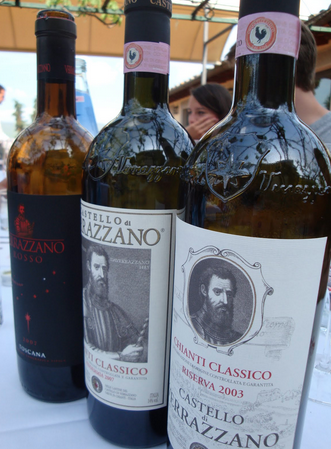
At CASTELLO VERAZZANO
 
GREVE in CHIANTI
 
TUSCANY, ITALY
 
 
READ about CASTELLO VERRAZZANO
 
And CHIANTI
 
At BELLINO on VINO
.
 
SUNDAY SAUCE
 
 
.
 
 
.
 
 
"I MISS GOTHAM HALL" !!!


Tuesday, February 13, 2018

Everything You Wanted To Know About CHIANTI

.  


Screen Shot 2018-02-13 at 4.44.03 PM.png


MY FAVORITE CHIANTI

Author Daniel Bellino Zwicke


Chianti! Chianti is Sacred Nectar of the Gods. Being so, Chianti should thus be treated accordingly to its exalted status, being deserved of society’s highest accolades that is Chianti’s due. Since its creation by the Baron Ricasoli in the 1870’s, Chianti has been held in the highest esteem and prestige. In its existence it has had a bit of a bumpy road in terms of quality and prestige for a portion of its history. This bumpy road or shall we say low-point for Chianti took place around the early 1960’s and into the late 1970’s, a period of about twenty-years. The Chianti of Chianti Classico in these years was pretty much; thinned-out, characterless, commercial wine of quantity rather than quality. It was all about producing as much wine per acre, that was possible, with pretty much a disregard for quality, large quantities of insipid, weak nondescript wines instead of wines with proper concentration, substance, and character. At the time (1960-1981), this was pretty much the case for most wines of Italy, not just Tuscany and the region of Chianti Classico. This being said, there was always a small percentage of top quality producers that never strayed to the negative side. These producers (wine estates) always produced good top-level wine outside of the majority of those producing a inferior product (Chianti). It’s just that at the time, the majority of the Italian wine industry was going for the money. It was more profitable to produce higher quantities of inferior wine, than to produce smaller amounts of higher quality Chianti, and so this is the way thing went for some time. Most likely it was not just that those making Chianti in this low-period may have wanted to make better quality Chianti, but the market which included the United States as the primary customer, along with Italians in Italy didn’t expect it. Once some estates started turning out lower quality Chianti, there was a snowball affect and so it seems, most Americans buying Chianti in the 50s, 60, and 1970s just expected Chianti at a cheaper price, of acceptable quality, and in the ubiquitous straw-wrapped wine-flask that was Chianti at the time was famous for, cheap and in its expected Straw Bottle. This is what the larger Chianti buying public, and even if there was higher quality Chianti, and there was some, most consumers just wanted the cheap stuff. One of the most influential figures in the history of Chianti is the Italian statesman, Bettino Ricasoli who created the Chianti recipe that would later be canonized in DOC regulations. The Ricasoli family traces their lineage in the Chianti region to Lombard barons who ruled during the 11th century. The family estate in Brolio is located in what is now known as the heart of the Chianti Classico region in the province of Siena. Orphaned at a young age, his family estate was crippled with debt and in disarray shortly after Ricasoli got married. Restoring the estate and its vineyard became his primary focus. Ricasoli traveled throughout France and Germany, studying the latest winemaking methods and brought back with him vine cuttings of new grape varieties. He began to experiment in his vineyard and cellar on which grapes produced the best wines at his estate. His work eventually settled on a blend of three Tuscan grapes-Sangiovese, Canaiolo and Malvasia.


Screen Shot 2018-02-13 at 4.43.31 PM.png


Castello Brolio


   I myself am on, and have been on a personal quest to have the laws governing how Chianti can be made. If I could make Chianti, what would I do? How would I make it? What style, thick and concentrated, thin and light, or somewhere in-between? Would I allow non-traditional secondary grapes of Cabernet Sauvignon or Merlot? “Certainly not! That would be most sacrilegious.” Number one, in molding what many consider to be a real and true classic Chianti, “you never ever allow, Merlot, Cabernet, Syrah or any grapes that are not native or traditional to the Chianti Classico zone into the mix (the blend of Chianti). As anyone who know a little about Chianti, they know that the primary grape of this storied wine is Sangiovese and from the beginning Chianti has always been a wine made with a blend of 3 or 4 native grape varietals with the primary grape being Sangiovese with small amounts of native grapes making up the remainder of an estates Chianti Classico. The secondary grapes to the primary grape of Sangiovese (75-100%) should only be either; Canaiolo, Colorino, Ciliegiolo, Trebbiano, or Malvasia Bianco, or Malvasi Nero, with any of these grapes being added singularly or in any combination the vintner chooses. The percentage of white grapes allowed since 1984 is a maximum of 6% as opposed to the once ridiculous about of 30% in the sixties and seventies. The allowance of up to 30% white grapes was the major factor in bringing about the bad reputation that Chianti garnered during those dismal years when the quantity of wine made (bulk) was favored over quality in smaller numbers of production in much of Italy. Luckily there were producers like the Antinori family who started making great wines in the Chianti Classico zone which could not be labeled under the Chianti D.O.C. but as Vin di Tavola (the lowest designation, though these wines were of Superior quality), in the wines; “Solaia” which was made primarily of Cabernet Sauvignon with about 20% Sangiovese and “Tignanello” which was made of 100% Sangiovese in its first vintage in 1971. After the first vintage of Tignanello a percentage of Cabernet Sauvignon (15-20%) was added a couple years later and Tignanello became and was designated a Vino di Tavola which most people know as Super Tuscan. So that very first vintage of the now famous Super Tuscan wine called Tignanello, was originally classified as a Chianti Classico. The Marchese Piero Antinori began making Tignanello in the Chianti Classico region along with “Sassicia” from his vineyard on the Tuscan coast of Bolgerhi. These wines were instrumental in elevating the wines of Tuscany, in that by making these high quality wines and inspiring other producers to do the same. So, the act of making exceptional quality wines in and around the Chianti region, which were not Chianti’s but Super Tuscans, was the factor that sparked the beginning of better and better Chianti’s over time.    The last two dates of 1984 and 1996 in which we see the governing bodies changing the laws governing the production of Chianti. These laws forced producers to make better Chianti. These laws which allowed producers to completely eliminate white varietals from Chianti and not allowing more than 6% white grapes was the main factor to improving quality in the wine, while at the same time allowing up to 15% of other varieties such as Merlot or Cabernet and the allowance of making a Chianti from 100% Sangiovese, thus allowing a Chianti that is not a blended wine, if a producer so chose to make Chianti in this fashion. These two new amendments gave way to radically changing what a Chianti was, now, what many believe to be more of a Super Tuscan than a true Chianti. Chianti’s made of solely 100% Sangiovese or those made with 10 to 15 percent Merlot or Cabernet Sauvignon would lose much of the general character that a “True Chianti” should have in order for it to really be Chianti and not just to say it is Chianti when it really is not. It’s really a Super Tuscan, which is fine, just to label it, or say that it is Chianti, when it really is not. I must admit that at the time the laws first allowed the addition of these International varieties, I was quite excited and thought that this was a great thing for Chianti. It wasn’t. I was wrong. I quickly changed my mind about what true Chianti really is, and not a wine that has substantial parts Merlot or Cabernet Sauvignon instead of what they should have, which are the tradition Chianti sub-varietals of Canniolo, Colorino, Malvasia, or Trebbiano. As I tasted these new wines and at the same time started learning a great deal more about Italian wine, I soon discovered that the Chianti’s that had either Merlot or Cabernet tasted completely different. “They didn’t taste like Chianti!” They didn’t have the wonderful rustic characters of true Chianti. They taste more like wines from California, instead of having the characteristics from the “Terroir” of where they came from;


Screen Shot 2018-02-13 at 4.57.58 PM.png


CHIANTI CLASSICO CONTI CAPPONI

Villa Calcinaia , Greve in Chianti


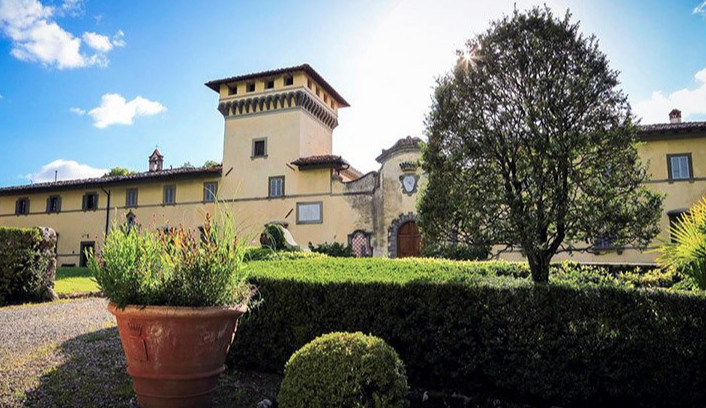
“Chianti Classico”, “Chianti Rufina”, “Colli Sienesi”, or “Colli Fiorentina”. Fortunately most producers making Chianti do not put Merlot or Cabernet in the bottles they label Chianti, most use Canaiolo or Colorino as the secondary grape. Wine estates that grow Merlot, Cabernet, or Syrah, generally use these varieties to make “Super Tuscan” wines which are much more profitable as they can get much higher prices on the wholesale and retail markets for these wines. To myself and other Italian Wine Geeks, if wine has Merlot or Cabernet in it, it’s a “Super Tuscan” not a Chianti and should be labeled as such as these grape varietals used, even in smaller percentages of only 5 to 10 percent are still powerful enough as to substantially change the character of what is supposed to be “Chianti”. These wines become something else, they become “Super Tuscans” and should be labeled as such (as far as I’m concerned)and not as Chianti which as the laws stand now they can be called Chianti. I am on a personal crusade to have the laws changed once again, which would eliminate non-native varietals from the Chianti blend.    One of the new parameters of making Chianti is that it can be made solely of 100% Sangiovese. This is the other part of laws governing Chianti which should be changed. As in its long tradition, Chianti was always a blend of grapes with Sangiovese making up the greatest part of the mix. Chianti was and always should be a blended wine, it should not be allowed to be made solely of Sangiovese, then again it’s a Super Tuscan not Chianti if you have a truly traditionalist mind towards Chianti. Chianti, when it was originated in the 1870’s by the Baron Bettino Ricasoli was a wine made of a blend of native grapes of the region of Chianti. The original Chianti made by Ricasoli was a blended wine made mostly of Sangiovese as the primary grape with small portions of Trebbiano and Cannaiolo. Until the lastest laws of 1996 which laid down the parameters of how Chianti could be made as a blend and it can also be made of purely 100% Sangiovese. Chianti made of just 100% Sangiovese is not quite true Chianti as well. I love Sangiovese. It is my favorite grape varietal in the World, but as well, Chianti was always a blended wine with Sangiovese as the primary grape varietal. Chianti was a blended wine for well over 100 years. With the latest laws, Chianti can be a made purely of Sangiovese. Some wines that are made of 100% Sangiovese and are known as Super Tuscans are; “Prunaio”, “I Sodi San Niccolo”, “Cipresso”, Le Pergole Torta among many others. They are wonderful wines that fall into the Super-T category as any wine made in the Chiati Classico Zone should be. Chianti should always be a blend, even if it is only 1% or 2% of another native grape, which should be Canaiolo, Colorino, Ciliegiolo, Trebbianno, or Malvasia Bianco, or Malvasia Nero. The white varietals should not exceed more than 2% of the blend. This is how the new laws governing the production of Chianti would be laid down if it was up to me and others who are traditionalist and want Chianti to always adhere to its original form. “Real Chianti!” The wines should have fairly low yields of grapes harvested, but not so low as to produce super-concentrated rich wines that are more like blockbuster California Cabs or Super Tuscan powerhouses. This is not what Chianti is about. Chianti should be a have a certain amount of concentration and at the same time maintain its wonderful rustic character with Cherry and Sour Cherry flavors dominating with a touch of spice and earthiness. Chianti should be an easy drinking medium to lower-scale-full-bodied wine. Chianti should always maintain the tradition of being a blended wine with Sangiovese making up the great the majority of its physical make-up. It should never be solely made from 100% Sangiovese but contain at least 2% of one, two, or three of the traditional native sub-varietal grapes of Chianti Classico and never Merlot, Cabernet, Syhrah or other International variety. If I could set these laws as the new DOCG laws of Chianti Classico the laws would never have to be changed again. The laws, the way they are set today are a little too broad. One thing that is good in the way the laws stand now is that they do allow for a proper Chianti to be made, and most Chianti’s are made in this manner, but at the same time they allow for non-native varieties and the allowance of 100% Sangiovese. These last two regulations must be changed for all Chianti’s to be “True Chianti”. It is as simple as that! So, let us hope that one day in the near future, these laws will be laid down and every single bottle labeled Chianti is actually real, true Chianti that lives up to this great wines history and origins.      Chianti Classico. What is it? First off, the area came first, the wine Chianti Classico is name after the area it comes from, which is Chianti. The Chianti Classico is the most famous. It stretches from just a few miles south of Florence at its most northern tip and runs down almost 30 miles to Castelnuovo Beradenga at its most southern point. As Chianti grew in popularity and fame, a number of other regions where Chianti can be made developed. Some of these areas are Cooli Fiorentini, Colli Senesi, Colli Arentini, and Rufina. None of these sub areas have ever gained anywhere near the fame as thee original Chianti Classico Zone. The Chianti Zone of Rufina, just outside Florence is the most prestigious zone apart from Chianti. These Chianti’s are of the highest quality. Three very well know producers in this area are Frescobaldi, Selvapiana, and Rufino and although the zone of Rufina is not as well known as the Chianti Classico zone, the zone of Rufina does have thee most famous Chianti of all, Rufino’s Chianti Classico Riserva Ducale (Gold Label).    So in closing, let us say that we hope the laws that govern the making of Chianti Classico will be changed some day. I think it is sure to happen. It would be best if it happens sooner than later, that in the making of Chianti, there shall be no Merlot, Cabernet Sauvignon, Syhrah or any other non-native or non-traditional grape varieties of Chianti Classico. Also the laws should be changed to eliminate 100% Sangiovese Chianti’s, Chianti should always be a blend.    The region of Chianti Classico is one of the World’s most beautiful wine regions, if not the most beautiful. It is enchanting, filled with castles, all forms of wine estates from small and simply to big and majestic. The beautiful rolling hills of Chianti are filled with Cypress trees that dot the crest of many a hill, along with rugged stone farm houses and the wondrous rows     Sangiovese vines lining the gently sloping hills.      Chianti is relatively untouched or spoiled by any type of ugly modern structures. The Chiantigiana road is still the ancient one built by the Romans and its pavement blends in perfectly with its untouched surroundings. Chianti is filled with lovely little towns like Castellina, Gaile, Greve, and Radda where you will find the famous Dante quoting butcher Dario Cechini. You can visit and stay in beautiful wine estates like Fattoria Valle, Castello Verazzano in Greve where the explorer Giovani Verazzano is from. You can stay at the beautiful estate of Vignamaggio where Gioconda lived and was painted my Michael Angelo. She is “Mona Lisa.”    Chianti, it’s not just a wine. “It’s a Place, a very beautiful place!”


Screen Shot 2018-02-13 at 4.56.50 PM


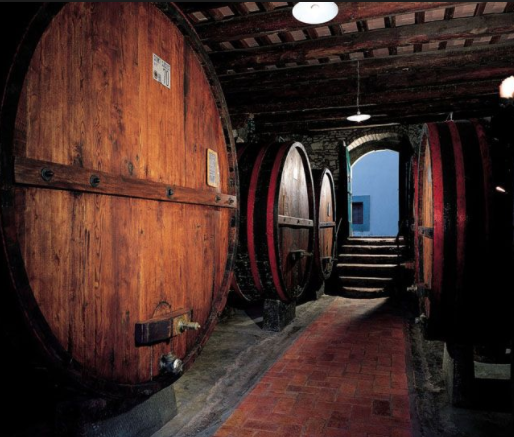
CHIANTI AGING in BARRELS

at CASTELLO VERRAZZANO

GREVE in CHIANTI


.
Screen Shot 2018-02-13 at 4.44.18 PM


Author Daniel Bellino-Zwicke
with The Owner of Castello Verrazzano
Caveliere Luigi Cappellini


.
Screen Shot 2016-10-30 at 2.25.18 PM


SUNDAY SAUCE

Daniel Bellino Zwicke


  .
Screen Shot 2018-02-13 at 5.06.22 PM.png


VILLA CALCINAIA

CONTI CAPPONI

GREVE

 
.
Screen Shot 2018-02-13 at 5.02.54 PM.png


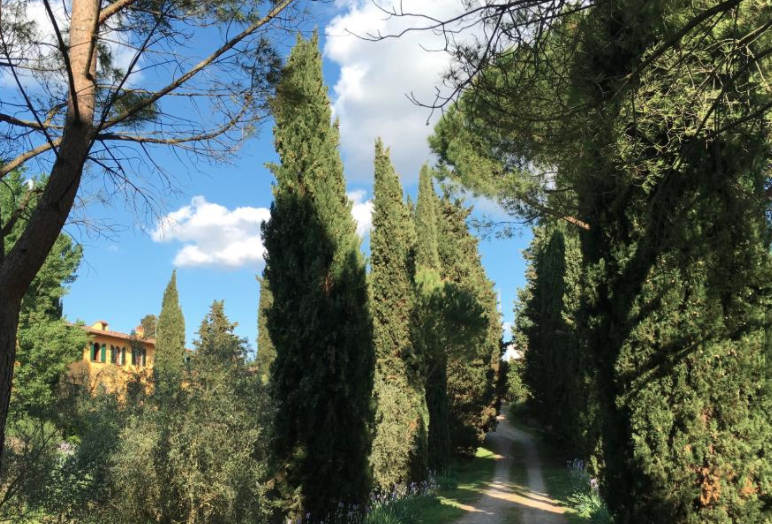
Road Leading to Villa Calcinaia

Conti Capponi

Greve in Chianti


.


Having Lunch with The CONTI CAPPONI

VILLA CALCINAIA


GREVE in CHIANTI


.                                   A LIST of TRUE CHIANTI’S made primarily with Sangiovese with small amounts of native sub-varities such as Canaiolo, Malvasia Nero, Colorino, and Ciliegiolo and not containing any Cabernet Sauvignon, Merlot, Syhrah, or any Intl. Varieties.   Monsanto “Il Poggio” Chianti Classico Riserva Castello Verazzano Chianti Classico Castello Brolio Chainti Classico Reserva Vignamaggio Chinati Classico Riserva “Mona Lisa” Rufino Chianti Classico Riserva “Ducale” (Gold Label) Selvapiana Chianti Rufina


.
    .  
ameritexmovers_2017


MANGIA ITALIANO

MEMORIES of ITALIAN FOOD


.

.

Tuesday, January 3, 2017

Amarone dal Forno in New York

 
Dalforno Wines
The Days Line-Up
MICHELE Dal FORNO & Author Daniel Bellino-Zwicke
Private Tasting
of
Dal Forno Wines
at
The Nomad Hotel
NEW YORK, NY, Oct. 2014
Author / Wine Director of DeGrezia restorante in New York, Daniel Bellino-Zwicke
tasted through an offering of Dal Forno Wines with Michele Dal Forno at a Private Wine Tasting at The Nomad Hotel in New York .
Michele tasted Daniel on the Dal Forno Valpolicella Superiore 2008, Romano Dalforno Amarone 2008 and a 2003 Amarone in magnum as well as Dal Forno Recioto 1197 which Michel says is Dal Forno's greatest wine .. Funny, we would have thought it was the Amarone.
Daniel really enjoyed all the wines. He loved the Valpolicella 2008 which he said, "at the prices that Dalforno gets for its wines, the Valpolicella would have the best chance of selling, but even being the most inexpensive of all the Dalforno wines, its still quite expensive.
The 2003 Amarone was, "Extraordinary," Daniel said. It was served from a magnum and quite a treat.
Daniel, said that these wines, "are Trophy Wines," and are quite expensive. Few people, other than those with heavy bank-rolls could ever drink them.  He stated that a bottle in restaurants goes for anywhere from $650 to $900 a bottle for a current vintage, while older vintages cost more. Daniel stated that he has 4 different vintage Dal Forno Amarone on his list, from $650 to $850 ... The wines never sell, too expensive. They sit in the cellar waiting for someone with deep pockets to purchase a botte. Eventually, they sell, for now, they are resting in the cellar. Basta!